|
|
|||||||||||||||||||||||||
|
|
|||||||||||||||||||||||||
|
Readers comment on Prague between history and dreams
|
|
||||||||||||||||||||||||
|
|
|||||||||||||||||||||||||
![]() |
![]() |
![]() |
![]() |
|
|||||||||||||||||||||
|
9 x 12
12 x 18 16 x 24 20 x 30 24 x 36 |
$75
$150 $250 $350 $500 |
|
|||||||||||||||||||||||
|
|
|||||||||||||||||||||||||
|
|
|||||||||||||||||||||||||
|
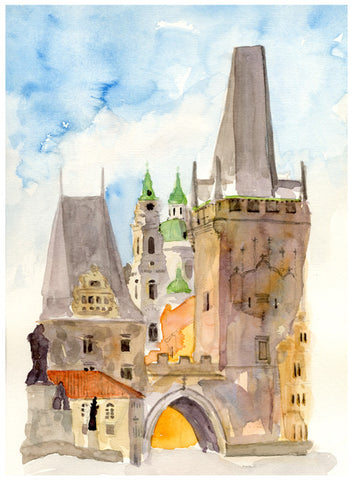
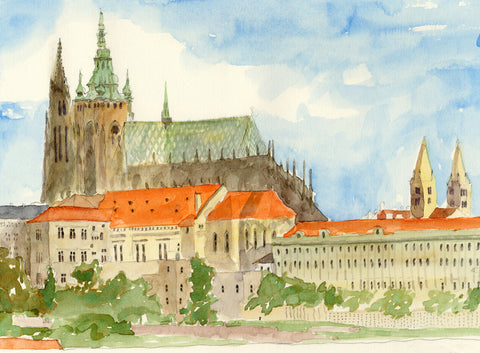
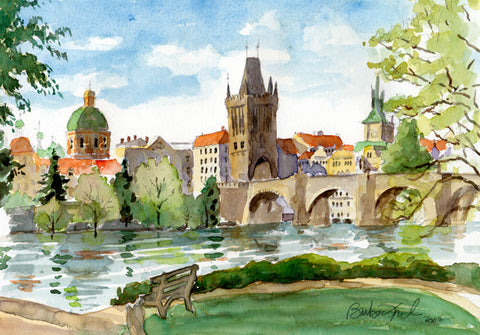
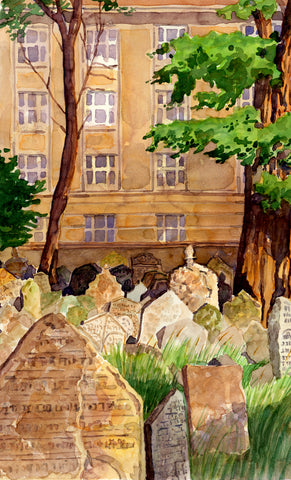
...Prague is a unique place where history and dreams are truly interwoven. Only
a few people understand the processes that have resulted in such a paradoxical
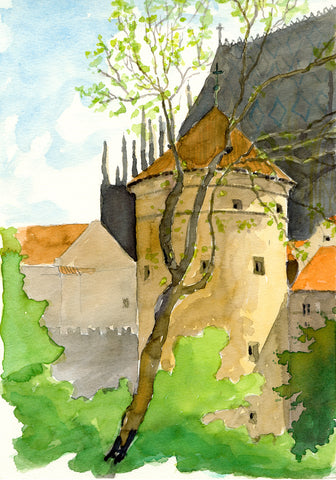
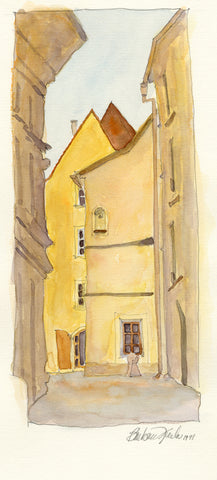
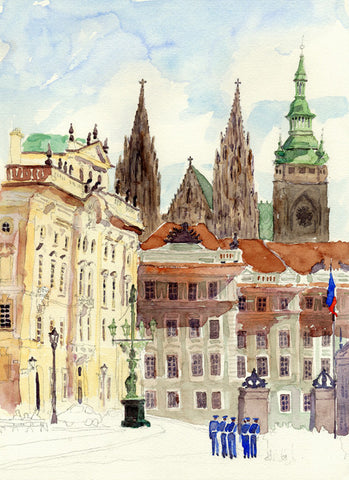
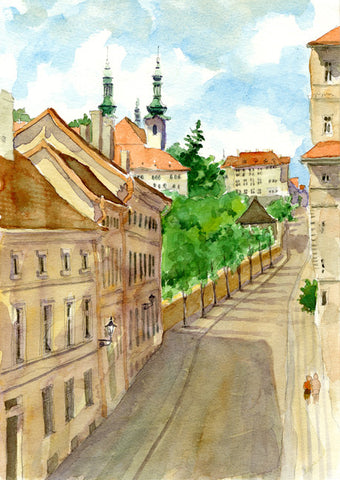
but wonderful amalgamation. Václav Cílek is definitely one of them, and the soft airiness of Barbara Froula's
paintings engages the reader in this genuine Central European message.
His Excellency Martin Palous, Czech Ambassador to the U.S.
|
..As a Czech expatriate who remained in love with the city where I spent my
youth, I want to compliment you on the magical portrait of it and the sensitive
text which I find unparalleled with any I have seen about the Golden City...
Thank you for the pleasure your art has given me and for rekindling the genius
loci for me.
D. Ziffer
|
...I bought your book recently from a Canadian supplier and have so far read
only part of it...But I am already very impressed, with your beautiful and
moving paintings, and with Dr. Cilek's expressions of 'soul' in describing
Prague's magic places. I've been there many times, lived there for 6 months
once, and hope to return many times more. I love the city as you two must.
Congratulations on a beautiful work, and thank you for doing it.
J. Vosoba
|
...I just received your book on Prague about 20 minutes ago. Your paintings
truly capture the colour of the city and bring to happy memory the places I
visited there. I especially liked your renditions of St George's Basilica,
Belvedere , Loreto, the two of St Nicholas, Karlovy Most, Our Lady before Tym,
Bertramka, Troja, Havel Market.... and others.
I will send this copy to a friend who grew up in Prague. I would like to buy
another copy of the book for myself...
M. Filosa
|
The book came today. I love it... I love the paintings. Will the originals be in
the show in Iowa?...
B. Furstenau
We are loving your book – even more now than before our trip! You really have captured so much of the
essence of Prague in your art ...
B. Conn
|
|
||||||||||||||||||||
|
|
|||||||||||||||||||||||||
|
|
|||||||||||||||||||||||||
|
|
|||||||||||||||||||||||||
|
|
|||||||||||||||||||||||||
|
|
|||||||||||||||||||||||||
|
Excerpt from Radio Prague preview by David Vaughan, Pavla Jonssonova:
Vaclav Cilek: "Prague: Between History and Dreams"
Digging through the layers of an ancient land
A fascinating new book by Prague writer, geologist, and philosopher Vaclav
Cilek, called Prague: Between History and Dreams, offers an extraordinary
journey into the different layers of the past and present.
The book is full of unusual and quirky insights: historical details, legend,
philosophical reflection and observations from everyday life, as Cilek scrapes
away at the history of the places around us in a refreshing alternative to the
rather dull, ponderous style beloved of guidebook writers. Cilek reflects on the reasons why we need to look for meaning
in the fragments that remain of the past.
In Between History and Dreams, Vaclav Cilek continues a rich tradition in Czech
writing of combining the arts and sciences. “If you want to grasp a kind of reality you have to combine science and history with a dream-like poetical reflection of the place." Dr. Cilek is one of
the Czech Republic's most respected geologists and director of the Geological
Institute of the Czech Academy of Sciences, and his reputation in his own
scientific field is every bit as strong as his reputation as a writer...
*************************************************************
Full interview:
[08.02.2004] - Czech Books - Pavla Jonssonova, David Vaughan
Vaclav Cilek: "Prague: Between History and Dreams" - Digging through the layers
of an ancient land
"Relationships created over hundreds of years can't be easily destroyed -
relationships to those complicated yet ordinary things: wood, soil, the
landscape. The unique awareness in mind and heart of those things that form the
essence of a place is called genius loci - something that cannot be given a
name, but to which we always return." Welcome to Czech Books. Those were a few
lines from the beginning of a fascinating new book by the 49-year-old Prague
writer, geologist and philosopher, Vaclav Cilek. It's called "Prague: Between
History and Dreams" and offers an extraordinary journey into the different
layers of the past and present of Prague and the towns and countryside around.
The book is full of unusual and quirky insights - historical details, legend,
philosophical reflection and observations from everyday life - a refreshing
alternative to the rather dull, ponderous style beloved of the writers of
guidebooks. Vaclav Cilek is quite simply different. For a start, he is well
known as the Czech Republic's foremost expert on tunnels, caves and catacombs.
As he told me when he came to visit our studio last week, this fascination
colours his writing.
Vaclav Cilek was a caver, in fact, and I was in close touch with the earth. You
are getting into the interior of the earth; you are touching the stones. I love
the moss and so on. So in fact I have felt to be impregnated by something that
I try simply to translate into words."
"Prague is a house with a thousand floors. We live on the upper four or five
levels, only vaguely aware of the rest. Yet, thanks to fossils from Prokop
valley, mushrooms from the Nebusice woods, and the age-old yew trees below
Prague Castle, we can touch the mysteries of ancient lives and passions that
have sprung from this magical place. The city reveals much of itself and keeps
many secrets. We can move through it vertically - from one level to another -
or horizontally, from place to place. Or we can experience it as a collection
of atoms, an immense person - a living being. Prague lies just north of the
geometric center of the historic kingdom of Bohemia, which, combined with
Moravia, forms today's Czech Republic. The relationship between Prague and the
rest of the country is so intimate that it is impossible to understand Prague
without the Czech countryside, and without knowing Prague, it is impossible to
comprehend the Czech Republic. Prague is located on a spot where continuous
Slavic settlement goes back to at least 650 A.D. Before that time, twenty
successive ceramic cultures, each with its own stories, music and ornaments,
flourished and then died. Twenty lost civilizations, twenty Atlantises! Their
spirit and art have disappeared into time immemorial."
In his interest in science Dr Cilek is no amateur. He is one of the Czech
Republic's most respected geologists, director of the Geological Institute of
the Czech Academy of Sciences, and his reputation in his own scientific field
is every bit as strong as his reputation as a writer.
In "Between History and Dream", Vaclav Cilek is continuing a rich tradition in
Czech writing of combining the arts and sciences - a tradition most famously
reflected in the work of the immunologist and poet Miroslav Holub who died five
years ago. One critic described Holub's poetry as "mathematics with blood in
it", and there is something of the same in the writings of Vaclav Cilek and the
way that he scrapes away at the history of the places around us.
"I believe that when you are coming to a place which has its own spirit of the
place, or maybe let's call it the spirit of the time, then you should know how
old it is, when it was built, not to get drowned in too much detail, but simply
to have at least some basic information about what it is and how it functions.
It is hard facts and hard dates, it is a kind of science, but the science is
always just a part of knowledge, of the recognition of things. This is the
rational part. And then are coming the irrational things, like ideas, dreams,
reflections, poetry in fact. So I think that I am not the only person who
thinks that if you want to grasp a kind of reality - let's call it that - you
have to combine a science - in this case historical dates - with dream-like
poetical reflection of the place."
"You may notice, by the Pohorelec tram station, a memorial of Tycho Brahe and
Johannes Kepler. They had a small astronomy observatory in the garden of a
nearby school. Emperor Rudolf II used to come here. Sharp-eyed Tycho Brahe was
the best practical astronomer of his period, sitting over a pile of his
collected astronomical observations but unable to sort it out. He lived like a
knight: His house was always full and noisy, and he loved wine and good
company. Johannes Kepler was the opposite - his weak eyes prevented him from
observing the stars. His irregular salary was one-tenth of Brahe´s, and he sent most of his money to his wife. He loved humble evenings spent in
solitude over mathematical formulae. He was not so much interested in astronomy
as in harmonia mundi, harmony of the universe. His mind was sharp, he was the
best theoretician of his era, and, in a house at the end of Charles Bridge, he
discovered his two first laws of planetary orbits - the greatest scientific
accomplishment ever made in Prague. Space travel, cell phones, and global
positioning devices are all directly linked to this discovery."
"I have the feeling that there exist a kind of correspondence between your inner
landscape or 'inscape' as I call it and the outer landscape, that both are
influencing each other. If you want to know who you are, simply you can look
out of the window and observe the landscape around you, and then you may start
to understand yourselves without any psychoanalysis."
"Is the world established on some simple general mathematical principles
according to which God built the universe? Kepler spent most of his life
contemplating these questions. The search for the number six is described in
Kepler´s book, Six-Cornered Snowflake, which marked the beginnings of scientific
crystallography. One winter afternoon, walking down from a meeting with the
emperor at the Castle, he observes the snowflakes falling onto his coat and
counts the corners. There are always six. He asks himself, why six and not five
or eight? Which principle selected the number six from all possible numbers? He
speculates on the soul of the Earthb - does it have a cubic form, since a cube
has six planes? Does this soul project its shape and the number six through the
water vapor to form snow, influencing everything under Heaven?"
A passage from "Between History and Dreams", taking us to the 16th century
Prague of Rudolf II. If you don't buy into the popular myth of Prague as a
place of mystery and magic, this probably isn't the book for you, but I think
that even the less romantic reader will find much of interest. One thing that
appeals to me in Cilek's writing is the way that he makes connections. For
example, in his chapter on the National Cemetery on Prague's Vysehrad, he
offers some fascinating thoughts on the rise of nationalism in 19th century
Europe reflected in this quiet corner of Prague. Elsewhere, he asks himself:
why did Baroque sculptors in the 17th and 18th centuries fill churches with
chubby and slightly distasteful statues of cherubic little boys? He offers a
very humane answer. This was a time when three out of five children died, so
mothers coming to church loved to imagine their children as fat, smiling and
happy. Baroque kitsch turns into something humane and touching. Here is Vaclav
Cilek's version of the story of the famous Infant Jesus of Prague.
A Sacred Object: Nearby, the Church of Our Lady of Victory in Malá Strana has a world-famous small wax statuette of Little Jesus of Prague at a
side altar. The statuette is considered one of the most sacred religious
objects of Bohemia. The Little Jesus came to Prague from Spain sometime after
1555 as a wedding gift. It was donated to the church in 1628 during the Thirty
Year War. In 1639, the Swedish general Banner was planning an attack against
Prague. In every church in Prague, monks were praying day and night, and in
this church, the Carmelites held special services in front of the altar with
the Infant Jesus statue. The small figure had previously been known to help
people who had prayed before it, but this time it was asked to save an entire
city. Just a few days before the attack, Banner unexpectedly withdrew his
armies. The rumor was that a secret messenger visited and threatened him with
some unknown disaster. A similar event occurred two years later near
Regensburg, where Carmelites were praying in front of the copy of Infant Jesus.
In both cases, people attributed the armies' withdrawal to the Son of God,
mediated via the small wax statue. Copies of Little Jesus were exported by
missionaries to Mexico and other countries. What is considered so miraculous
about the image of the boy Jesus? Is it the transformation of a small,
vulnerable child into a mighty King? The poetic image of a little boy traveling
through a perilous world who overcomes danger and obstacles by gentleness and
forgiveness was as powerful in Prague as among the Indians of Mexico. Here we
are touching what is perhaps both the greatest strength and weakness of
Catholicism—it is so impregnated with ancient imagery that one wonders if this kind of
religion is a new form of paganism or a vast pool of sacredness where everyone
can catch a fish of his or her own."
I'll end the programme with one more reading, this time from the very end of the
book, where Vaclav Cilek reflects on the reasons why we need again and again to
look for meaning in the fragments that remain of the past.
"The reasons we visit and return to historical places deserve consideration.
Beyond the obvious beauty of the art of previous ages, there may be other
reasons. Being no islands, we need to be connected to art, history and nature
like knots on an ancient Oriental carpet. Historical places help us live more
than one life. They evoke feelings from the depths of shared collective memory.
Places are like mirrors and give us a new awareness of ourselves. Continually
confronted with the mixture of sacredness, beauty, suffering and death, we
realize that there is more than just one culture. We want to belong to this
never-ending story. Ships are safe in the harbor, but that is not what ships
were built for, according to a sign that I read on the door of a church. Heave
the anchor! Travel, read, seek, and if you are lucky you will hear the echoes
of voices that will still sound when fish swim in the cathedral."
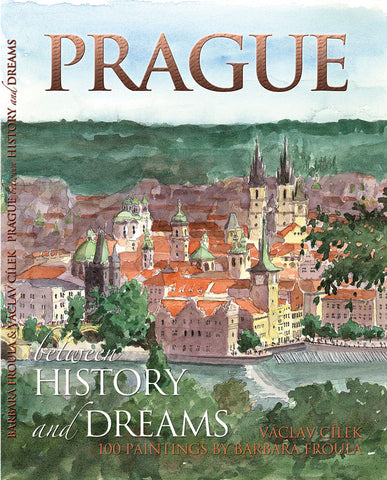
Vaclav Cilek's "Prague: Between History and Dreams". The book is also
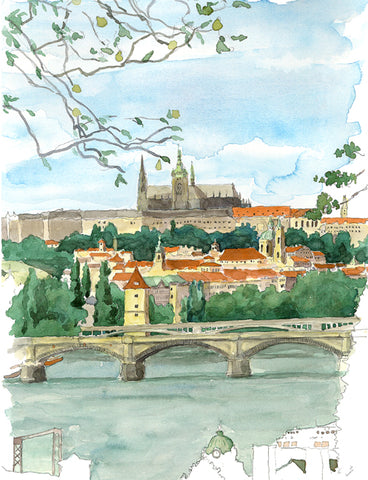
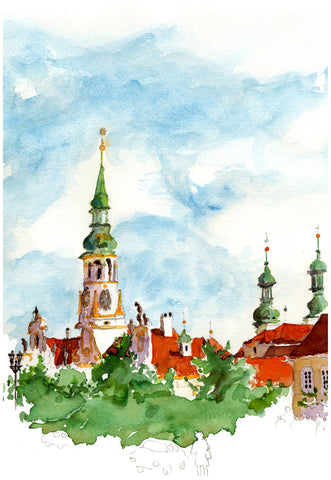
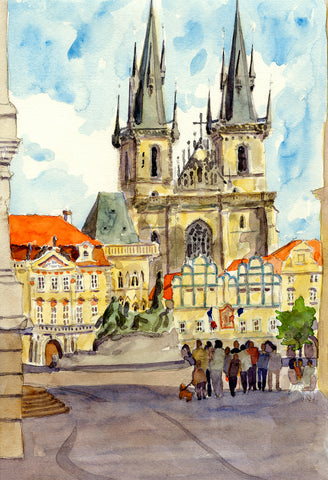
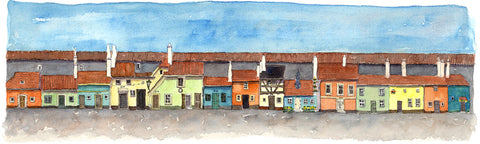
illustrated with watercolours by the American architect Barbara Froula. If you
want details about how and where to purchase the book, you can go to the
website www.praguedreams.com.
Books for this programme supplied by Shakespeare and Sons.
------------------------------------------------------------------------
Source: Czech Radio 7, Radio Prague
URL: http://www.radio.cz/en/article/50292
© Copyright 1996, 2004 Radio Prague
All rights reserved.
|
|
||||||||||||||||||||||||
|
|
|
|
|
|
|
|
|
|
|
|
|
|
|
|
|
|
|
|
|
|
|
|
|
|
|